
Highlights of Leighton House Museum: Frederic Leighton’s studio, Arab Hall, Pre-Raphaelite works, and a peaceful garden retreat.
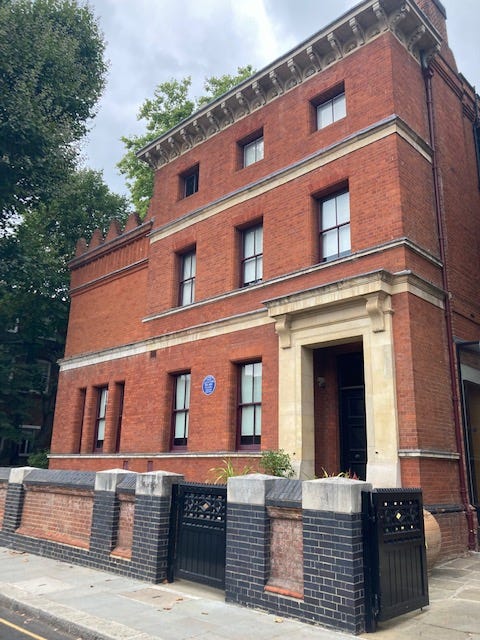
A haven in West London
This wasn’t my first visit. There is something endlessly enjoyable about returning to this magnificent house in West London. Just off Holland Park, the former home and studio of Lord Frederic Leighton is more than a museum — it’s a living canvas that brings 19th-century creativity into the present.
There’s a lot to take in, so I’ll share this in two parts: first, the official Leighton Museum and collection; and second, the visiting exhibition of works by Cecil French and Scott Thomas Buckle, on show until 21 September.
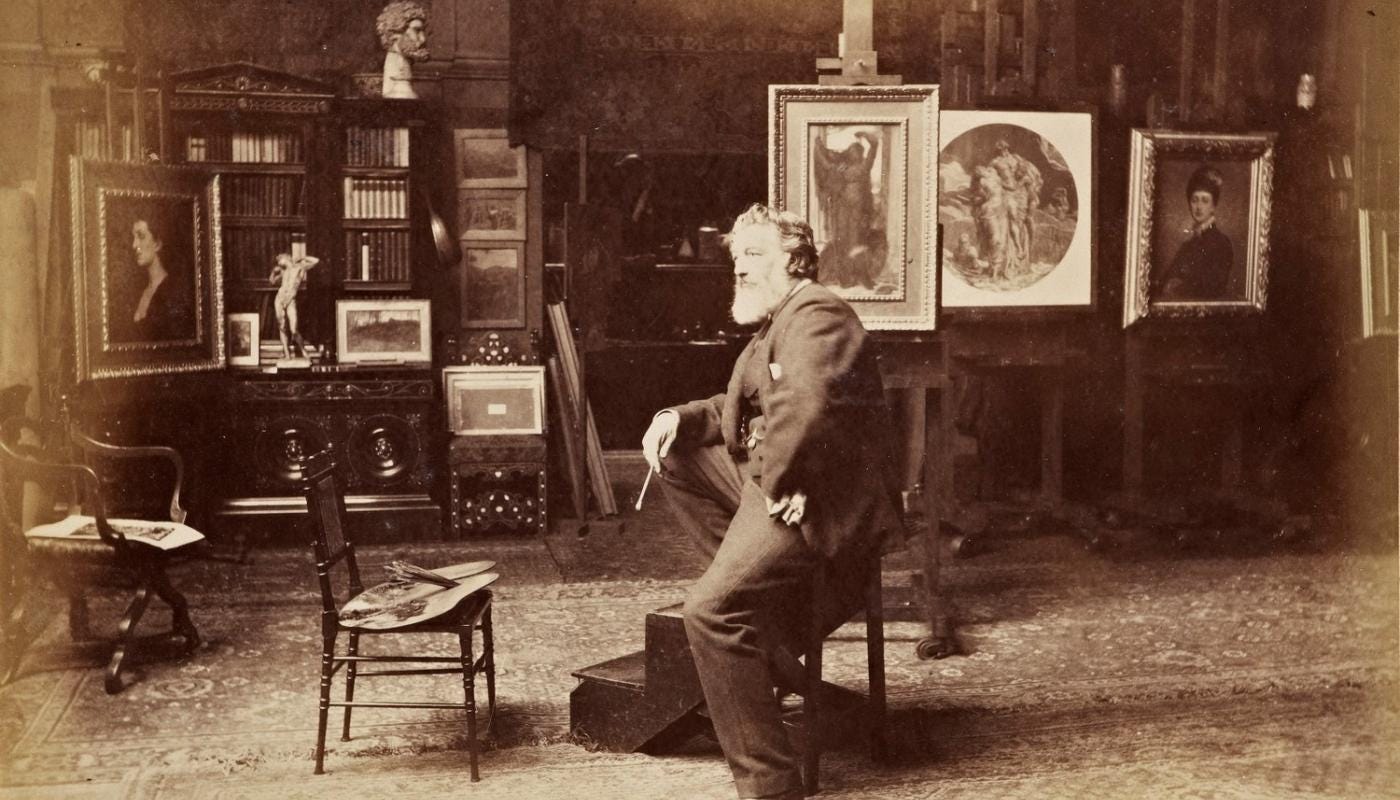
Lord Leighton: The Artist Behind the House
Leighton House was the home and studio of Frederic, Lord Leighton (1830–1896), one of the most celebrated British painters of the Victorian era. Known for his academic style, classical subjects, and meticulous attention to form, Leighton was a key figure in 19th-century art.
Among his most famous works are:
-
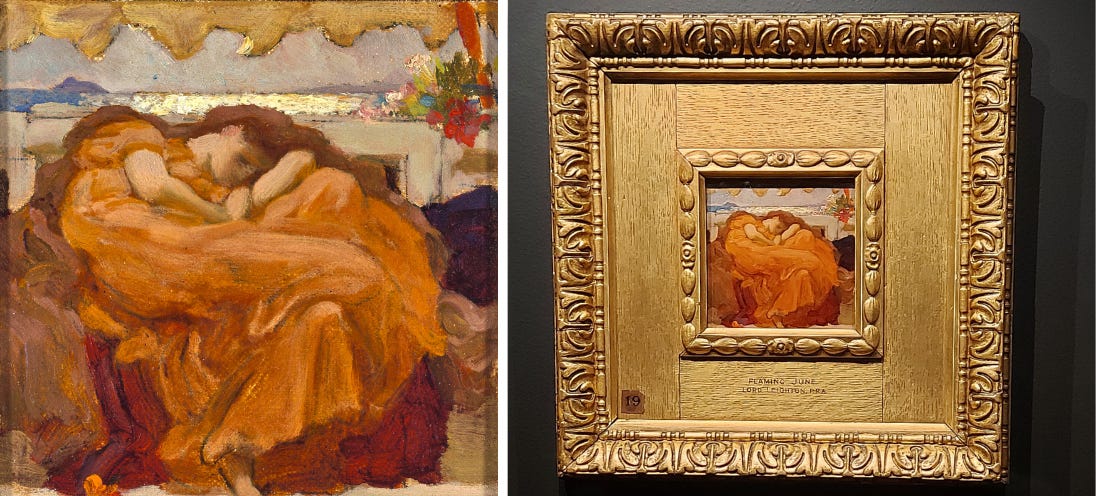
Flaming June (1895) — his best-loved painting, with its vibrant orange drapery and serene figure bathed in Mediterranean light.
-
Cymon and Iphigenia (1884) — an exploration of mythological narrative.
-
The Bath of Psyche (1890) — admired for its elegance and balance.
-
Athlete Wrestling with a Python (1877) — his only major sculpture, now a landmark of Victorian art.
These works embody the same qualities that shape the house itself: drama, classical influence, and a reverence for craftsmanship. Walking through Leighton House, it’s easy to see how the interiors and the art reflect one another — both extensions of his vision of beauty and design.
Main Highlights Inside Leighton House
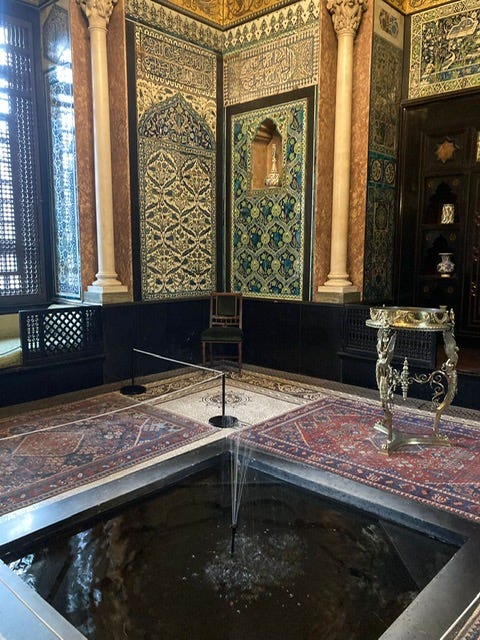
1. The Arab Hall
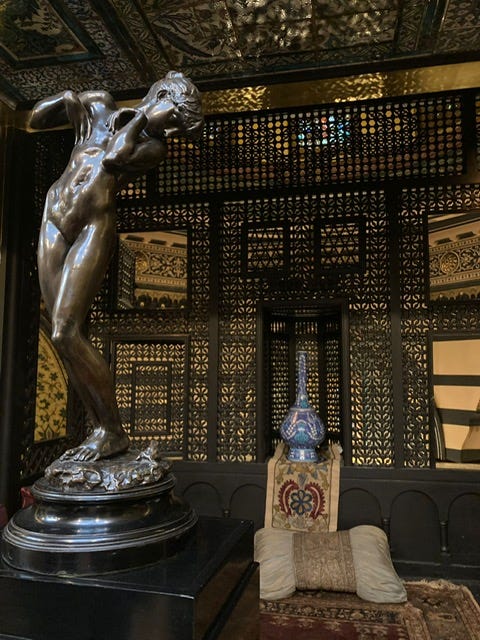
The showstopper of the house — a domed, golden room inspired by Leighton’s travels in the Middle East. It’s decorated with over 1,000 Islamic tiles from Damascus, Turkey, and Persia, many dating to the 16th and 17th centuries, alongside works by the celebrated ceramicist William de Morgan, . A central fountain, gilded dome, mosaic floors, and stained-glass windows combine to create a shimmering, exotic splendour.
2. The Studio
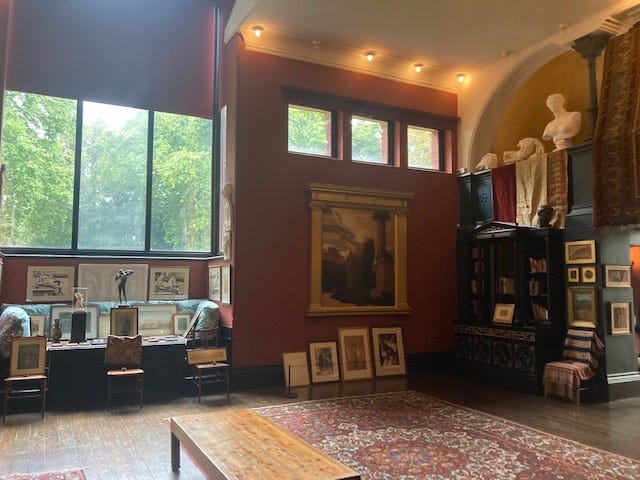
Leighton’s vast, light-filled painting studio, where he produced some of his most famous works, including Flaming June. Its huge arched north-facing window and soaring ceiling were designed to flood the space with natural light, perfect for his monumental canvases. You can almost picture Victorian society figures arriving for his renowned “Sunday receptions.”
3. The Narcissus Hall & Staircase
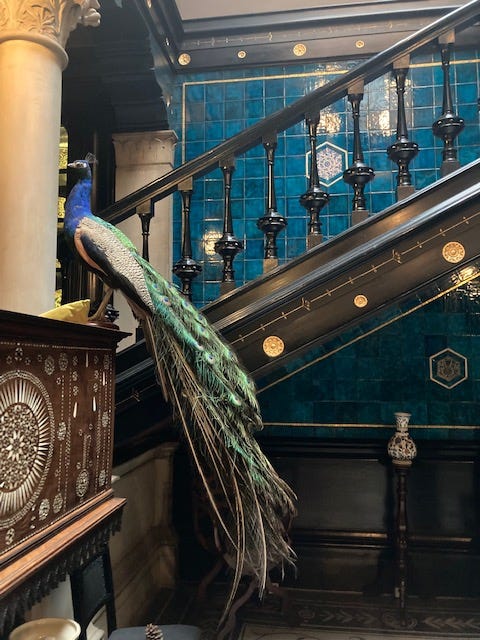
Named for the large bronze Narcissus by sculptor Sir Alfred Gilbert, this grand hall features a staircase richly adorned with mosaics, marble, and painted panels, leading dramatically to the upper rooms.
4. Leighton’s Own Works
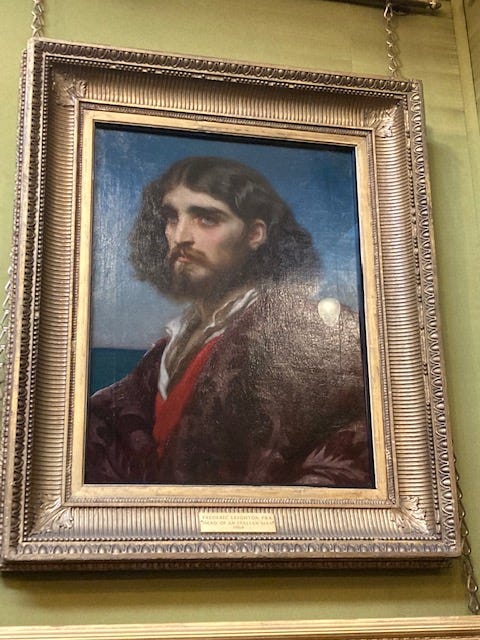
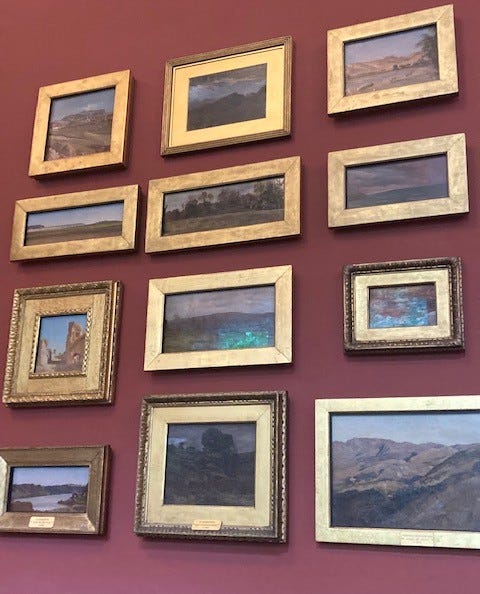
Among the treasures on display is Clytie (1895–96), his final, unfinished painting, showing the mythological nymph turning towards the sun. There are also studies, sketches, and smaller works, though many masterpieces (Flaming June, for example) are now housed elsewhere.
5. Victorian and Pre-Raphaelite Artworks
The house also includes works by Leighton’s contemporaries, such as John Everett Millais and Edward Burne-Jones, reinforcing how Leighton House functioned as both private residence and semi-public gallery.
Neighbourhood Stories: The Holland Park Artists
Leighton wasn’t alone in his vision. He was part of the Holland Park Circle, a group of artists who built magnificent studio-homes nearby. Their presence turned this leafy district into an artistic enclave, where form, tradition, and innovation flourished side by side.
The surrounding houses were once home to figures such as Val Prinsep, George Frederic Watts, and William Burges, among many others. Imagine what a remarkable neighbourhood this must have been at the height of its creative energy.
A Garden Retreat & Charming Café
After exploring the ornate interiors, the gardens provide a quiet retreat — a place to exhale before returning to the bustle of London. Tucked behind the house, they offer a secluded pocket of calm.
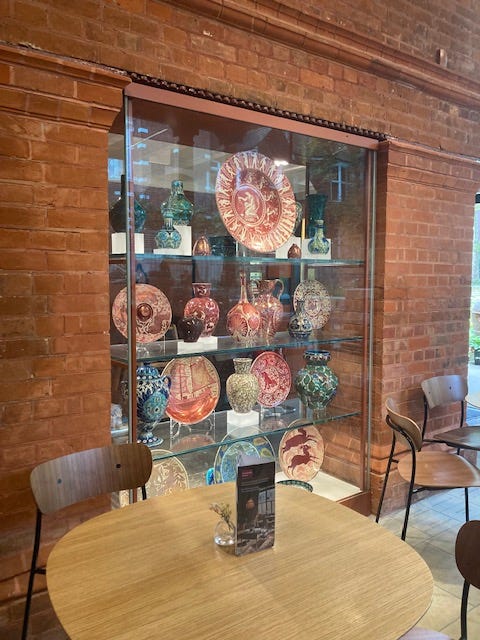
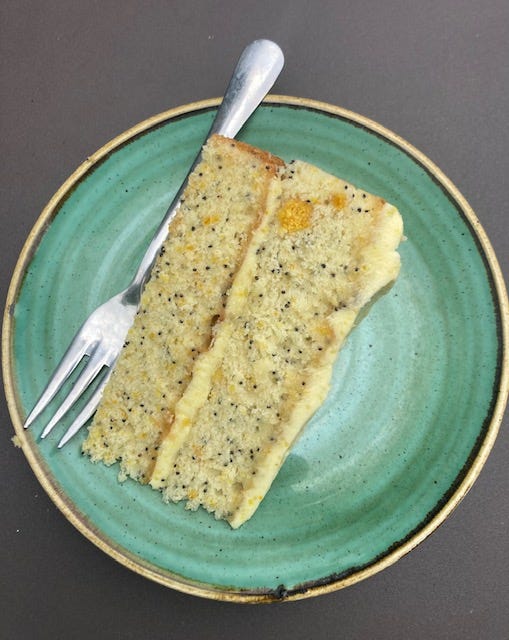
The recently added De Morgan Café is another highlight, housed in a light-filled space that holds a beautiful glass case of William de Morgan’s lustreware. It’s the perfect spot for an afternoon pause. The café serves an excellent selection of savoury and sweet treats; my orange and poppyseed cream cake did not disappoint!
The Perfect Weekend Treat
Leighton House is more than a museum — it’s a lesson in how art, architecture, and daily rituals intertwine. For anyone who loves design, atmosphere, or objects that tell stories, this place is a treasure.
On each of my visits, I’ve found it pleasantly calm — busy enough with curious visitors, but never overcrowded. You’re free to linger at your own pace, whether in the garden, the café, or simply pausing in front of a single work that catches your eye.
Visiting Information
-
Where: Leighton House Museum, 12 Holland Park Road, London W14 8LZ
-
Opening Hours:
-
Wednesday to Monday: 10:00 am – 5:30 pm (last admission 4:30 pm)
-
Closed on Tuesdays
-
Garden closes at 5:00 pm
-
-
Tickets:
-
Adults: £14
-
Concessions: £9
-
Children (6–18): £5
-
Joint ticket with Sambourne House: £22
-
Free entry with National Art Pass
-
-
Pay What You Want Day: First Monday of each month, 10:00 am – 1:00 pm (historic interiors only)
Would you like to visit Leighton House?
Have you ever visited a place that felt like a time capsule of creativity — where design, history, and atmosphere came together? I’d love to hear what resonated with you.