
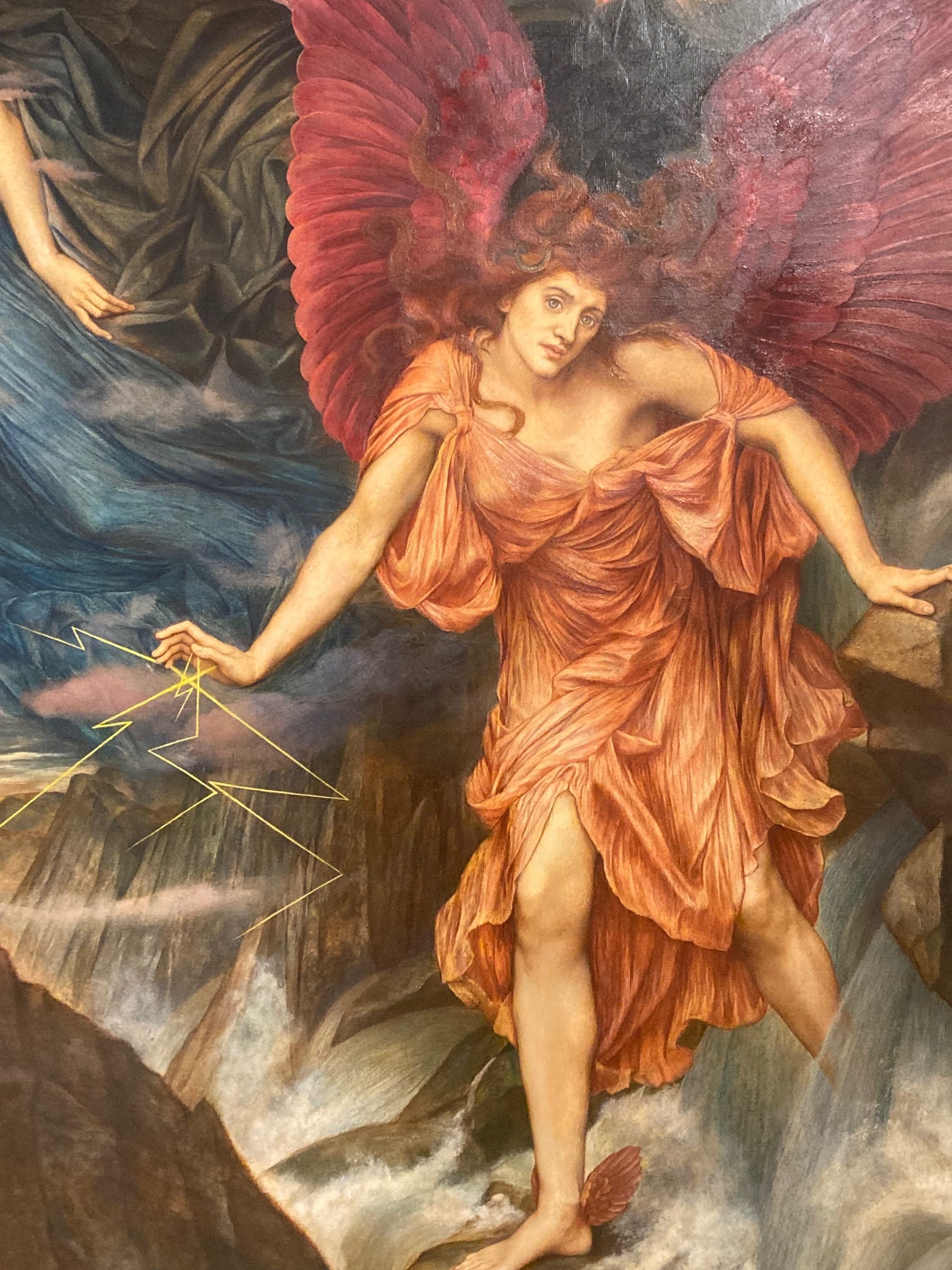
A closer look at the artist’s career, her Pre-Raphaelite influences, and her life with William de Morgan — on view in London until 2026.
This exhibition is a gem, and I know it won’t be my only visit before it closes in January 2026.
It’s currently on show at London’s Guildhall Art Gallery in the City. I went on a Saturday and, to my surprise, almost had the place to myself — a rare treat in central London.
Evelyn de Morgan: More Than “Mrs William de Morgan”
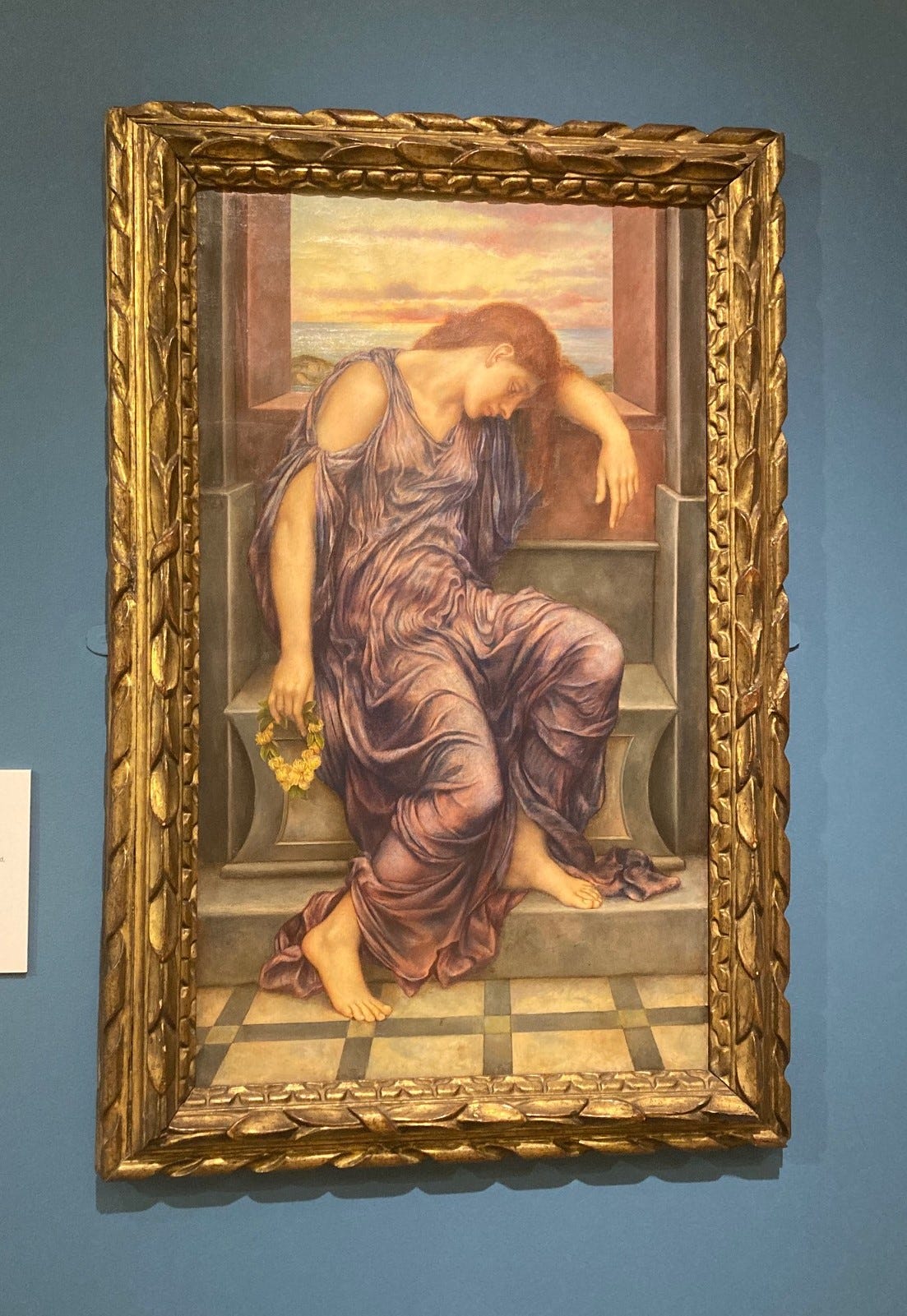
If you don’t know much about Evelyn de Morgan (1855–1919), this is the perfect exhibition to start with. It traces her artistic journey across her career, from her early training to her final exhibitions.
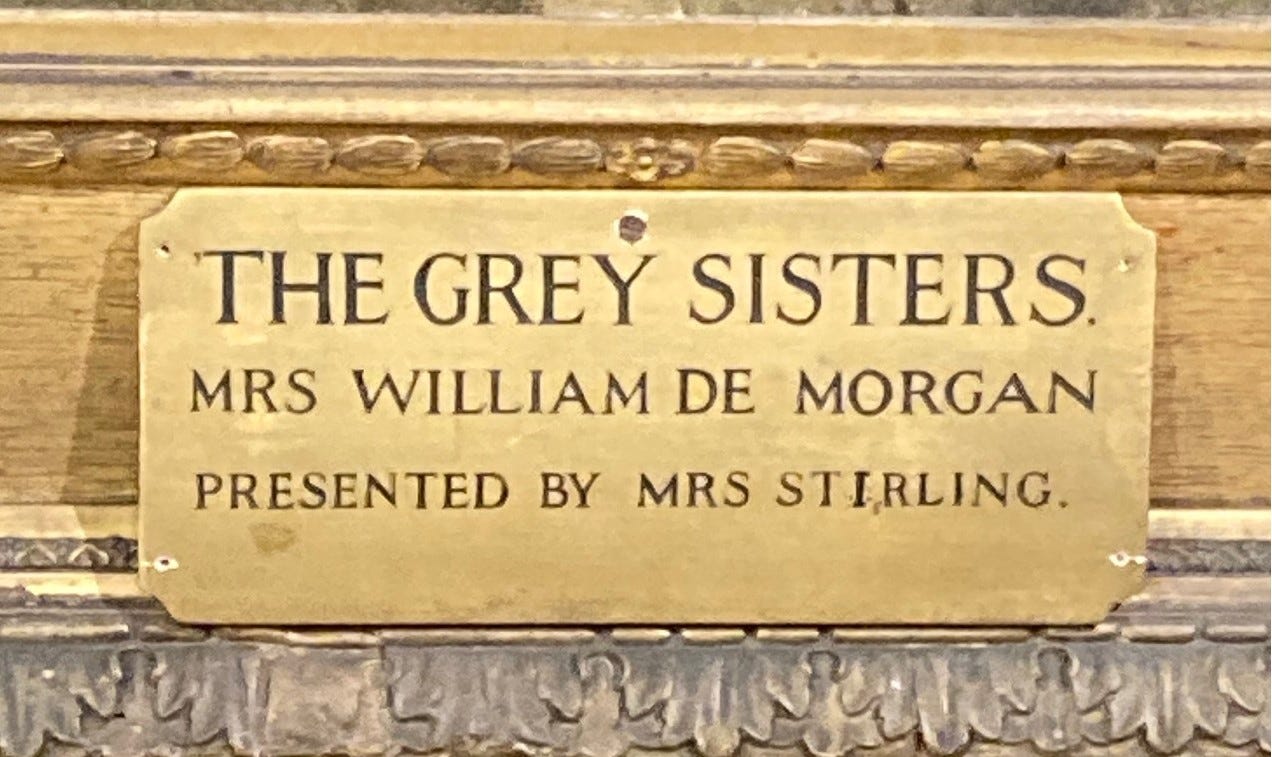
There are telling reminders of the era she lived in, when her work was sometimes attributed as “Mrs de Morgan” — despite the fact that she was already a highly successful artist in her own right (born Evelyn Pickering) long before she married William de Morgan. She had even bought her own home in Chelsea before their marriage.
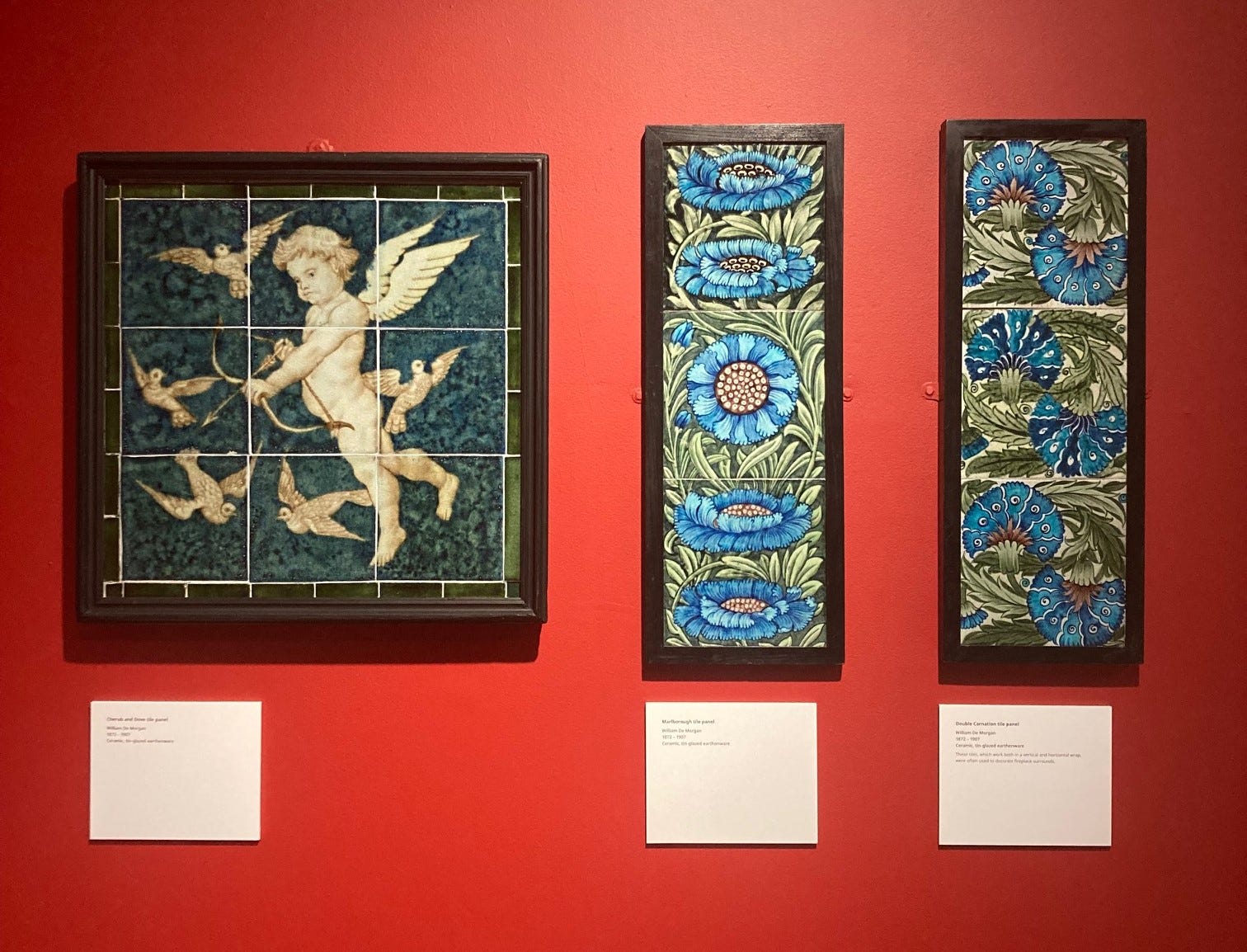
Her husband, William de Morgan, is perhaps best known for his stunning lustreware ceramics, although he was also a writer. The exhibition includes some of his work too, highlighting the creative partnership they shared.
Education, Influences, and the Pre-Raphaelites
Evelyn de Morgan studied at the Slade School of Art — one of the most progressive art schools of the time, particularly in its treatment of women. She was encouraged to paint by her uncle, John Roddam Spencer Stanhope, and soon became connected with the Pre-Raphaelites, forming friendships with Dante Gabriel Rossetti and William Holman Hunt.
She sold her first work while still at the Slade and soon exhibited alongside leading names of the day, including G.F. Watts, Rossetti, Burne-Jones, and Frederic Leighton. Even Oscar Wilde admired her art.
Life with William de Morgan
After their marriage, Evelyn and William shared studio space in London and also bought an apartment in Florence, where they escaped the chill of English winters. They had a wide circle of notable friends, including George and Mary Watts, and most famously, William and Jane Morris.
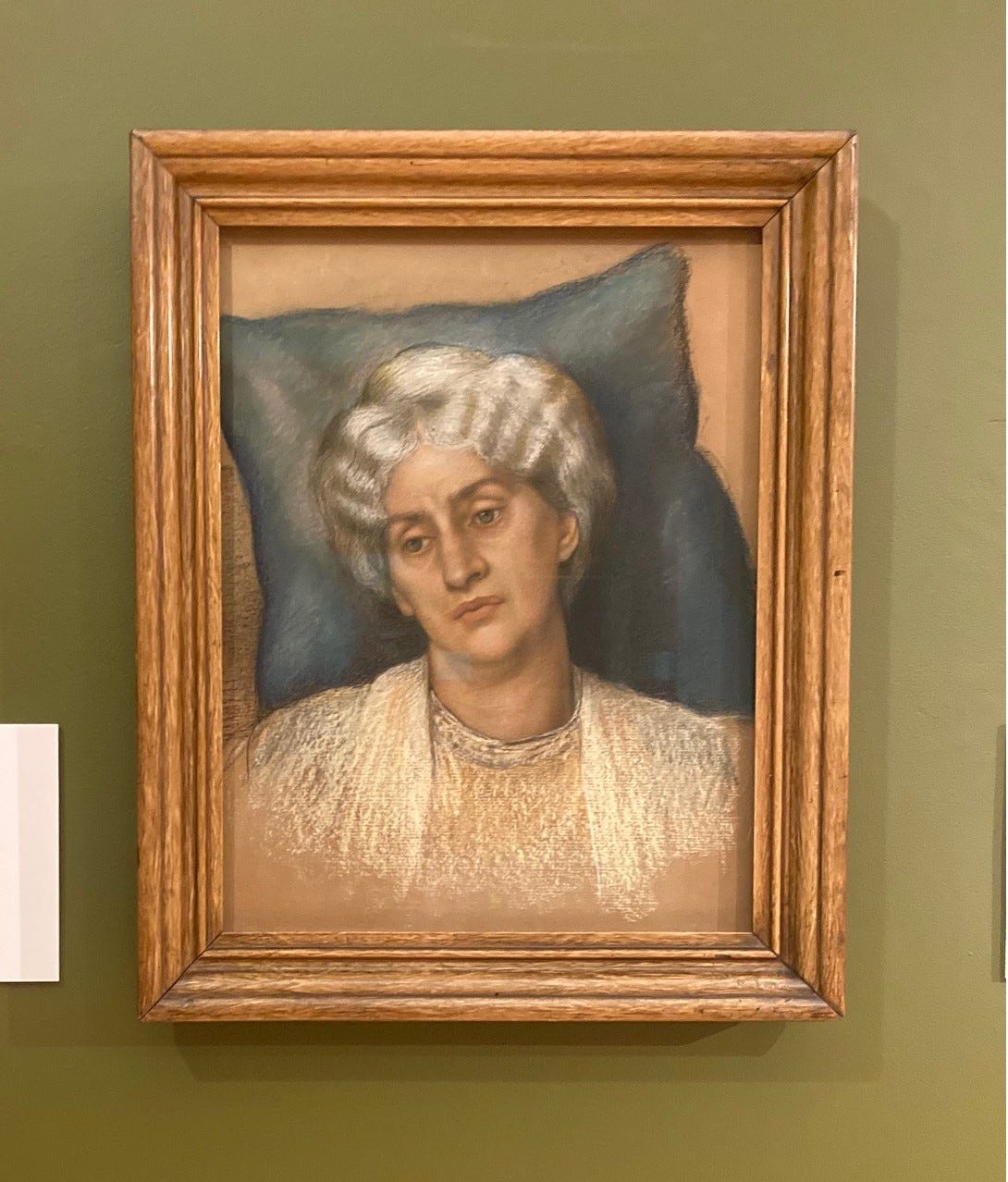
Jane Morris was a frequent model for Evelyn’s paintings, and her face is instantly recognisable in several works on display — including a striking portrait of her later in life.
War, Philanthropy, and Legacy
The exhibition takes you through Evelyn’s career, culminating in her last major show in 1916, when she donated all proceeds to the Red Cross. Both she and William were horrified by the devastation of war and wanted their art to make a contribution.
They supported one another throughout their lives and now rest together in Brookwood Cemetery, Surrey, beneath a tombstone designed by Evelyn herself.
Why You Should Go
Her talent is remarkable, her story compelling, and the curation of this exhibition is outstanding. It left such an impression on me that I plan to return — and I’d urge anyone with an interest in the Pre-Raphaelites, Arts & Crafts, or Victorian art to see it while you can.
Exhibition Information
Where: Guildhall Art Gallery, Guildhall Yard, London EC2V 5AE
Dates: On now until 4 January 2026
Opening Hours: Monday–Sunday 10-5
Tickets: By Donation
Website: Guildhall Art Gallery
Further Reading & Resources
There are two main places that I would suggest you look into her work further including the De Morgan Foundation. If you look at their website (linked below) you will find several resources for learning more about her and William’s work.
The De Morgan Foundation – dedicated to preserving the works of Evelyn and William de Morgan.
Evelyn De Morgan: Oil Paintings by Catherine Gordon (book).