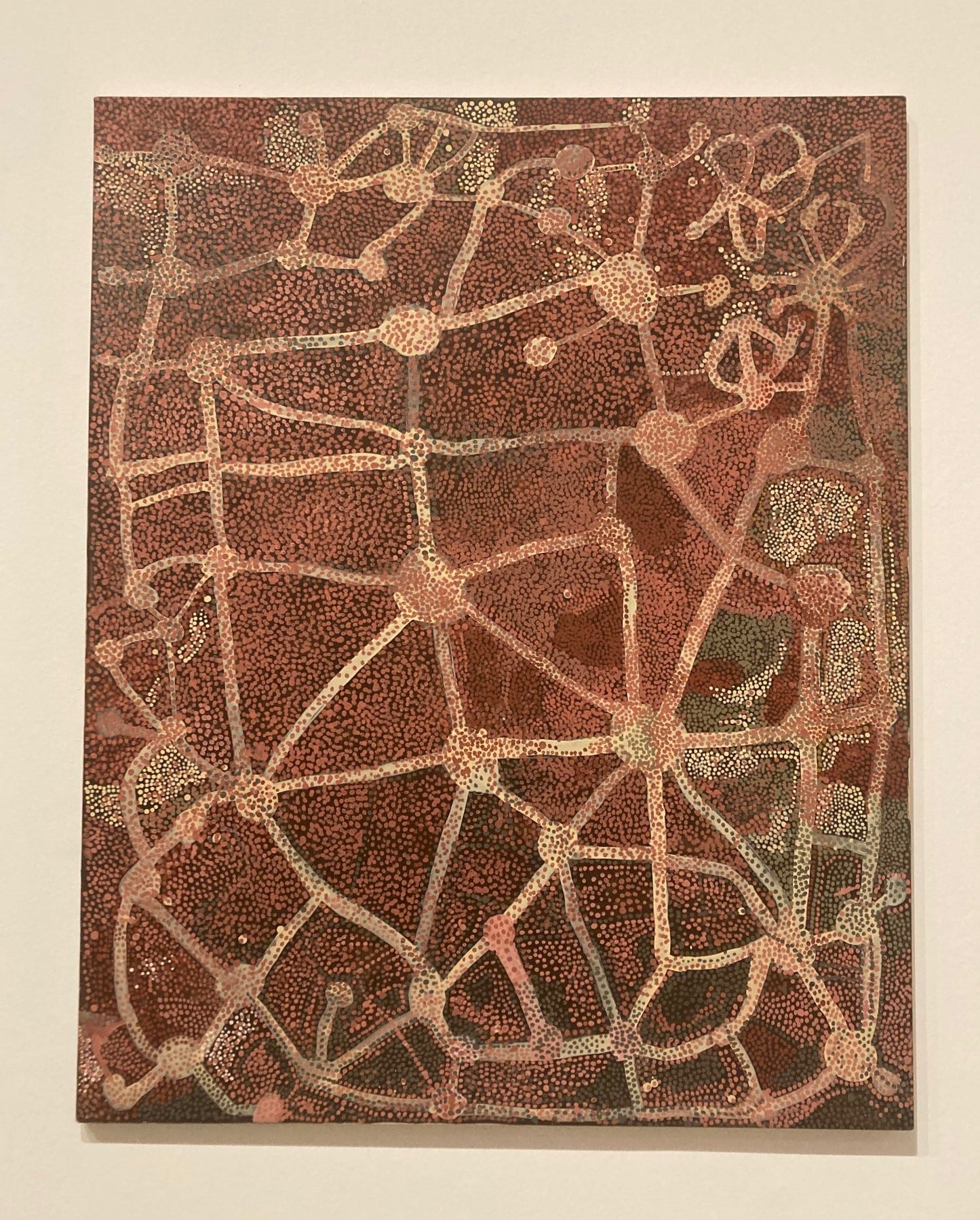
Discovering the work of one of Australia's great artists and the techniques she used
One of the things I love most about living in London is how easy it is to see art from around the world and discover artists you might not otherwise encounter.
Today I visited Tate Modern to see the exhibition of one of Australia’s greatest artists, Emily Kam Kngwarray (1914–1996).
As an Aboriginal woman, she lived in a remote region of Australia and witnessed the enormous changes that took place in the 20th century as more and more white settlers arrived, and as Aboriginal people and culture suffered profound mistreatment and loss.
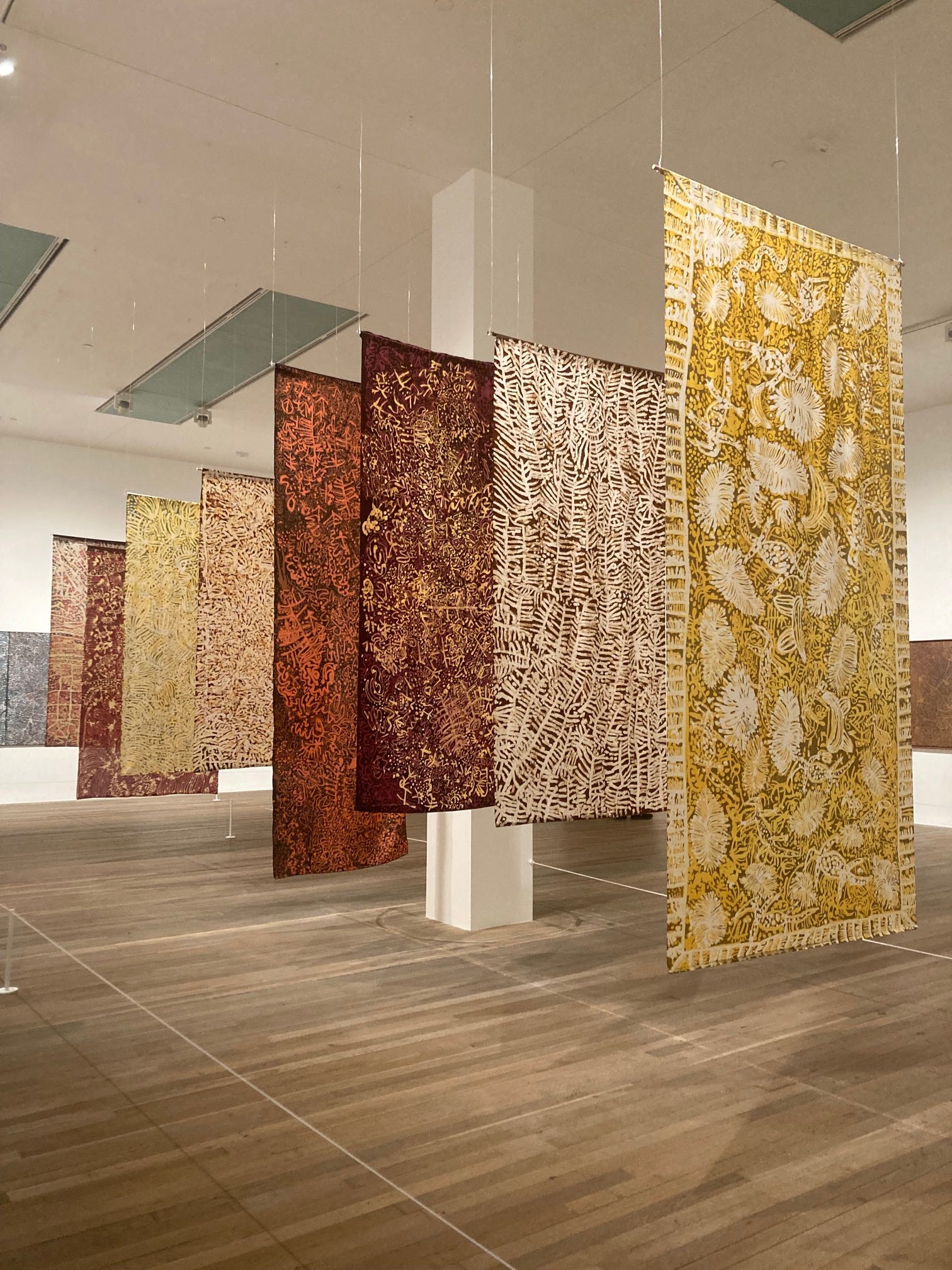
The exhibition traces her methods and materials and includes a film showing the rituals of her people, giving deeper insight into Aboriginal life. It’s easy to think of such traditions as belonging to the distant past, but exhibitions like this bring them into the present — reminding us to recognise and value them on their own terms, and to appreciate Kngwarray’s work both as cultural expression and as art in its own right.
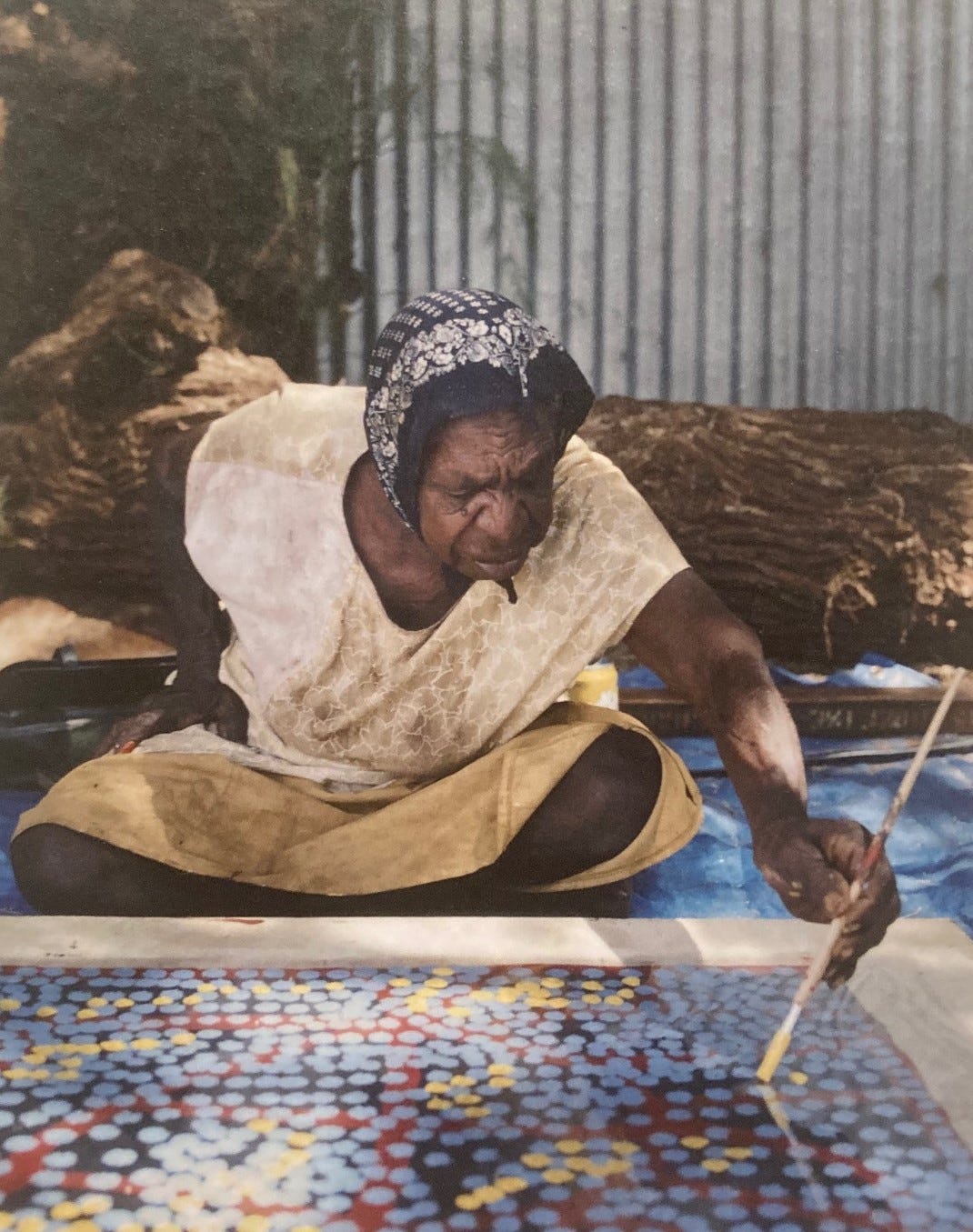
The show expands across many rooms, each one exploring a different stage of her career. From early works through to giant hanging textile panels, you see the development of her vision. Towards the end, her canvases grow in scale, her brushwork becomes bolder, and her style moves into striking lines and vibrant colour. It’s fascinating to note that some of these later works were shown in the 1997 Venice Biennale, affirming her global significance.
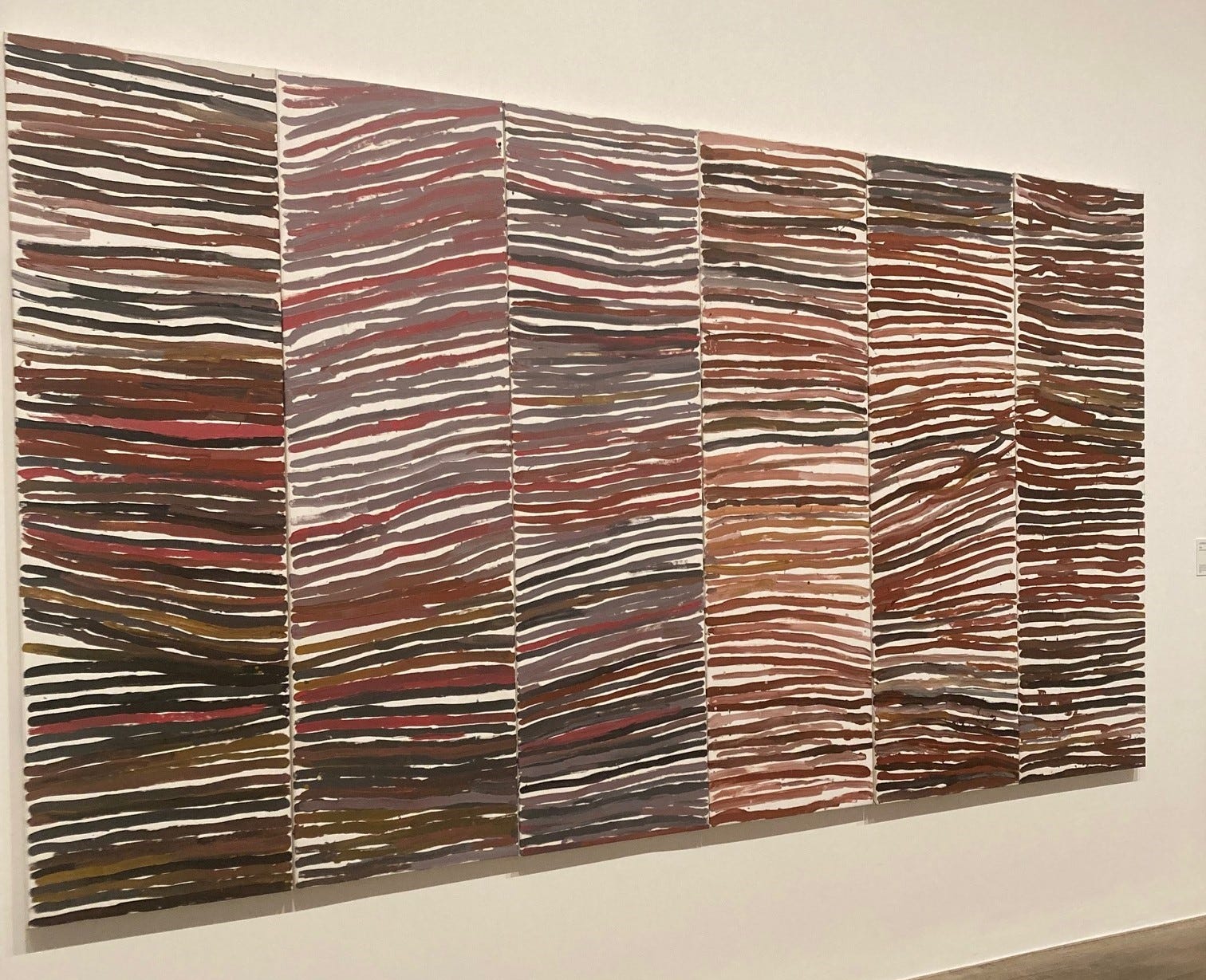
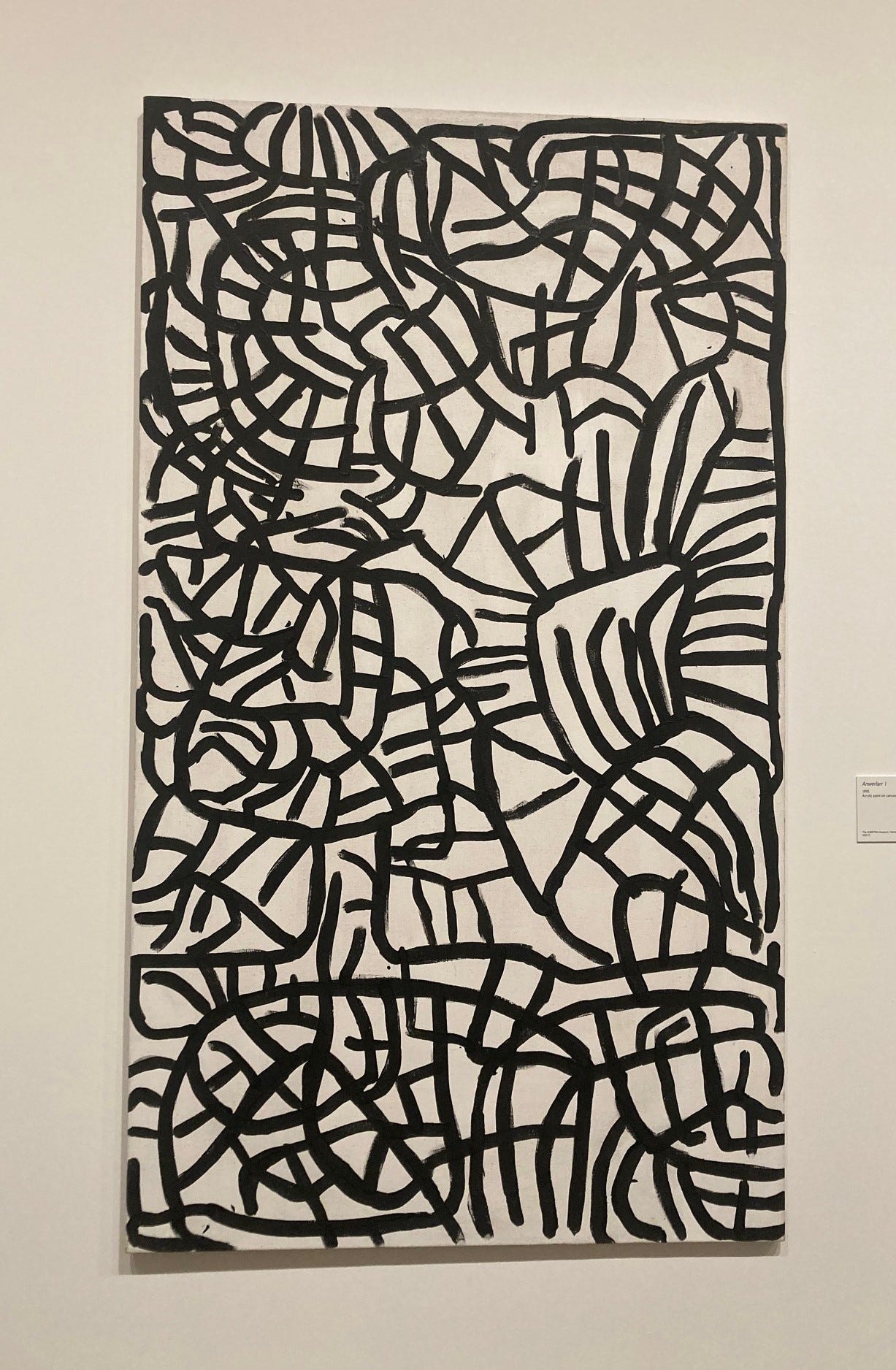
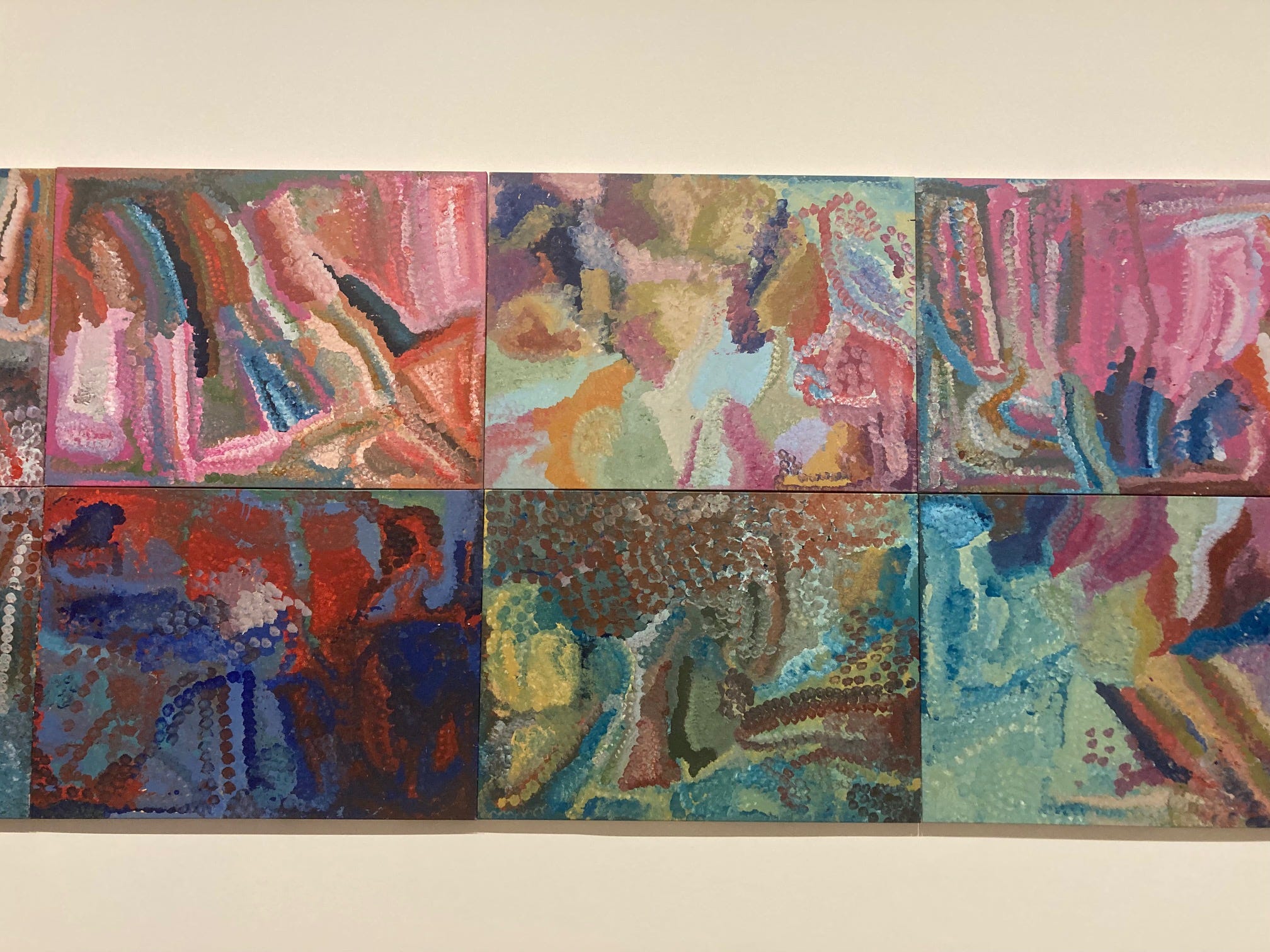
There’s plenty of time to catch this remarkable exhibition — it runs at Tate Modern until 11 January 2026.