MADDEN & MCHUGH
Delftware delft tile, 17th century
Delftware delft tile, 17th century
Couldn't load pickup availability
Share
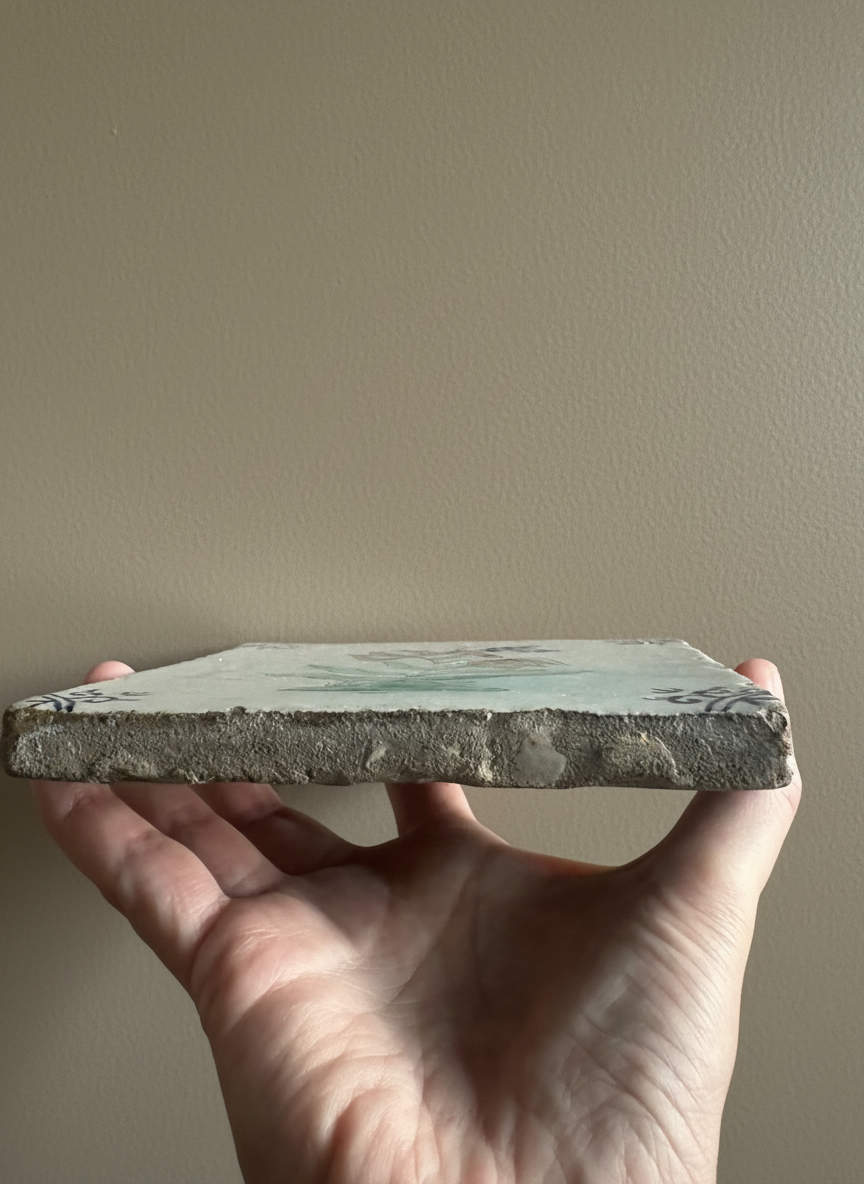
A 17th-century Delftware tin-glazed earthenware tile decorated in a hand-painted polychrome glaze. The surface depicts a central botanical motif rendered alongside a butterfly motif.
The tile is approx 1.3cms thick which is helpful in dating this to the early part of the 17th century (pre industrialisation craftsmanship). The subject and colours are also typical of the time although often tiles feature flowers or insects, and this has both which makes it even more interesting and collectable. The back of the piece has a pinkish brown colourway as you would expect, and green and brown marks from when it was probably removed from its original surroundings - old lime mortar and organic staining.
A beautiful piece approximately 400 years old - perfect as a display piece in any home.
Length 13.2 cm · Width 13.2 cm · Height 1.3 cm
Delftware refers to the tin-glazed earthenware produced in the Netherlands, most famously in Delft, Haarlem, and Rotterdam throughout the seventeenth century. Drawing upon Italian majolica traditions, Dutch ceramic workshops became renowned for their durable, decorative tiles painted with botanical studies, genre scenes, and regional motifs. Revered for their distinctive opaque white glazes and expressive hand-painted detail, early Dutch tin-glazed tiles remain central to the history of European ceramics and are prized by collectors today.
Very Good Antique Condition. The central artwork is exceptionally crisp, stable, and vivid with a natural all-over glaze craquelure. Three corners remain sharp. The right-hand margin features authentic pinholes. Defects: A minor, shallow historic glaze chip (approx. 1 cm) on the lower right vertical edge, well away from the main artwork. No structural cracks.